VIRGINIA
TEXAS
Behind Every Uniform, There's a Relationship Worth Nurturing.
You Serve.
You Support.
You Both Deserve to Feel Connected.
Loving someone in the military comes with a unique set of challenges. Whether you're navigating time apart, changing responsibilities, or the difficulty of reconnecting, you deserve a space where both of you feel heard.

“Military life affects both of you.”

When you're the one serving
You may be balancing duty, uncertainty, exhaustion, and the pressure of switching between military responsibilities and being present at home.
When you are trying to find each other again
You love each other, but you may struggle to communicate, feel understood, or adjust to being together after time apart.
When you're the one holding things together
You may manage the household, make decisions alone, and carry the emotional weight of missing your partner while trying to keep everyday life moving.

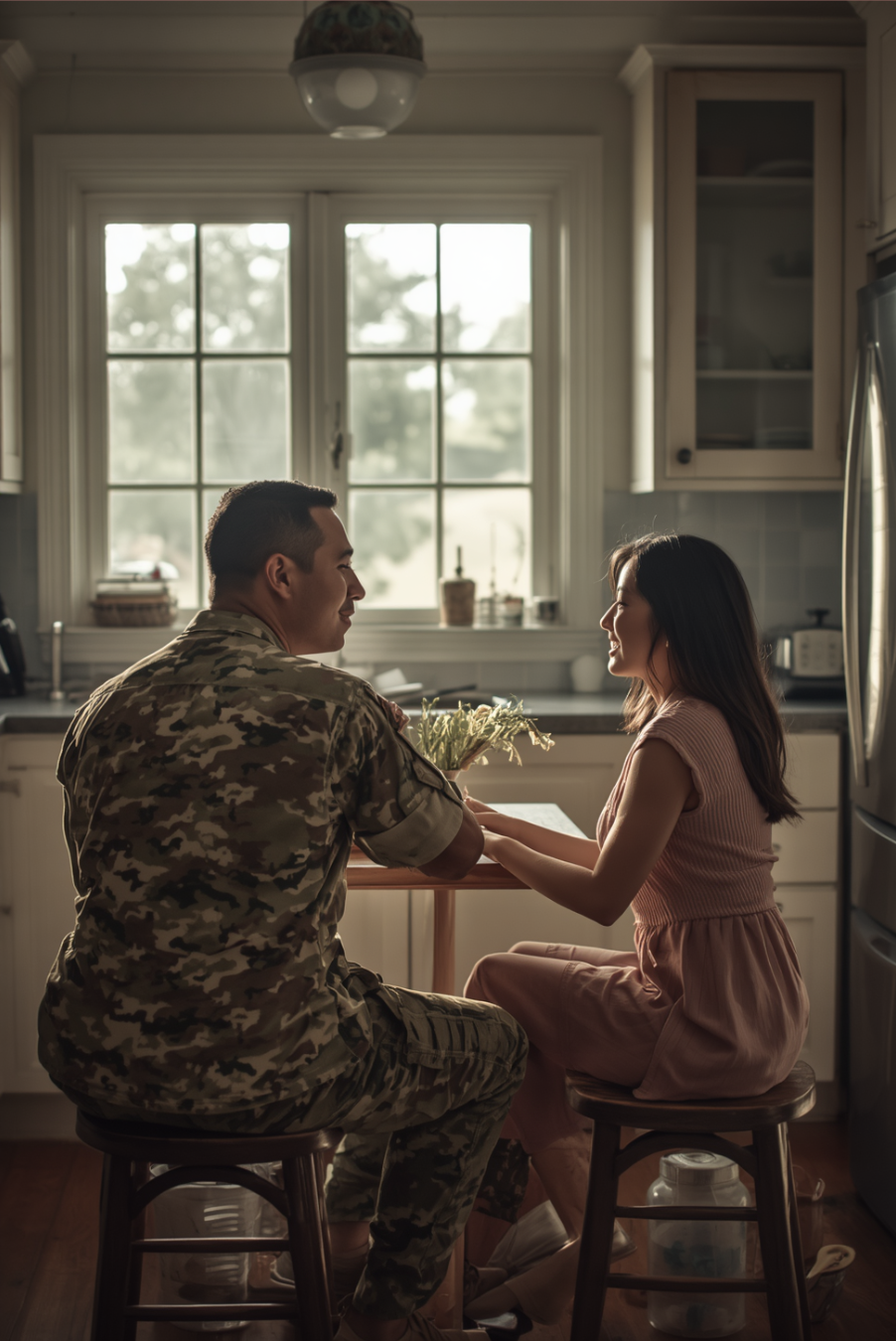
Neither of you has to be the bad guy for both of you to be hurting. You can be on the same team, even when life makes that difficult.
The Hardest Parts Aren’t Always Visible.
Reconnecting after time apart
Communication gaps
Feeling misunderstood
Protecting your conneciton
Time apart
Missing milestones, everyday moments, and the comfort of being together.
Uneven responsibilities
Feeling overwhelmed when one partner carries more of the daily load.
Trying to stay emotionally close when time, stress, or distance gets in the way.
Finding your rhythm again as routines, roles, and expectations change.
Making space for vulnerability when both of you are used to being strong.
Loving each other while struggling to understand each other's experiences.
You don't have to be on opposite sides.
You can love each other, appreciate each other's sacrifices, and still struggle to understand what the other person needs. Those struggles deserve compassion, not blame.
A Perspective Shaped by Military Experience.
Meet Selah Corcoran, MFT Intern

Military life is more than a job. It can shape your routines, responsibilities, identity, and the way you experience relationships.
Selah brings her own background in the military to her work with couples. This personal perspective can help her approach the unique dynamics of military-connected relationships with greater awareness and understanding.
Her goal is to help couples create space for honest conversations, better understand each other's experiences, and build a relationship where both partners feel valued and connected.
What working together can look like.
Couples therapy can help you practice new ways of understanding one another and navigating the demands of military-connected life.
Communicate more openly
Express your needs and hear each other with less defensiveness.
Share the load more fairly
Talk through responsibilities, expectations, and changing roles.
Rebuild emotional closeness
Create more opportunities to feel valued, supported, and connected.
Navigate transitions as a team
Approach time apart, reunions, and changes in routine with greater understanding.

A simple path to getting started

01 — Start With a Consultation Call
You’ll first connect with Justine, who will learn a little about what you’re looking for, gather the information needed to get started, and answer any questions you may have about couples therapy, Selah, scheduling, or the process.

02 — Find a Time That Works for You
Once you’re ready to move forward, we’ll find a session time with Selah that works for both partners and get your first appointment scheduled.

03 — Complete Your Intake Forms
Before your first session, you’ll receive the necessary intake forms to complete online. This gives Selah some helpful background before you meet and allows you to spend your first session focusing on your relationship.

04 — Meet With Selah
Your first couples session is an opportunity for both partners to share what’s been happening, talk about what you hope to change, and begin creating goals for therapy together.
Your Relationship Is Worth Showing Up For.
You have navigated so much together. You deserve support in building a connection that feels strong, understood, and meaningful, too.